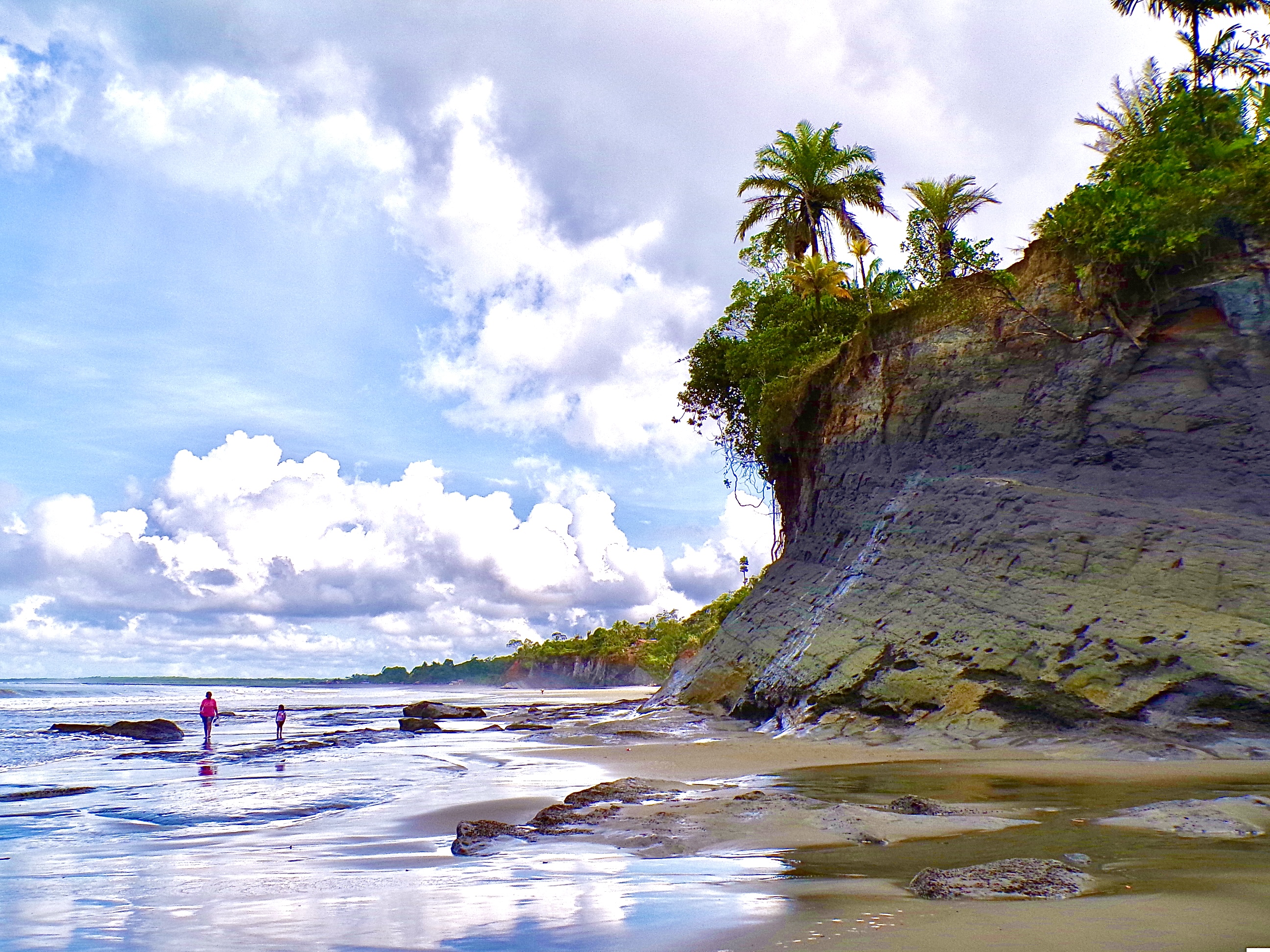
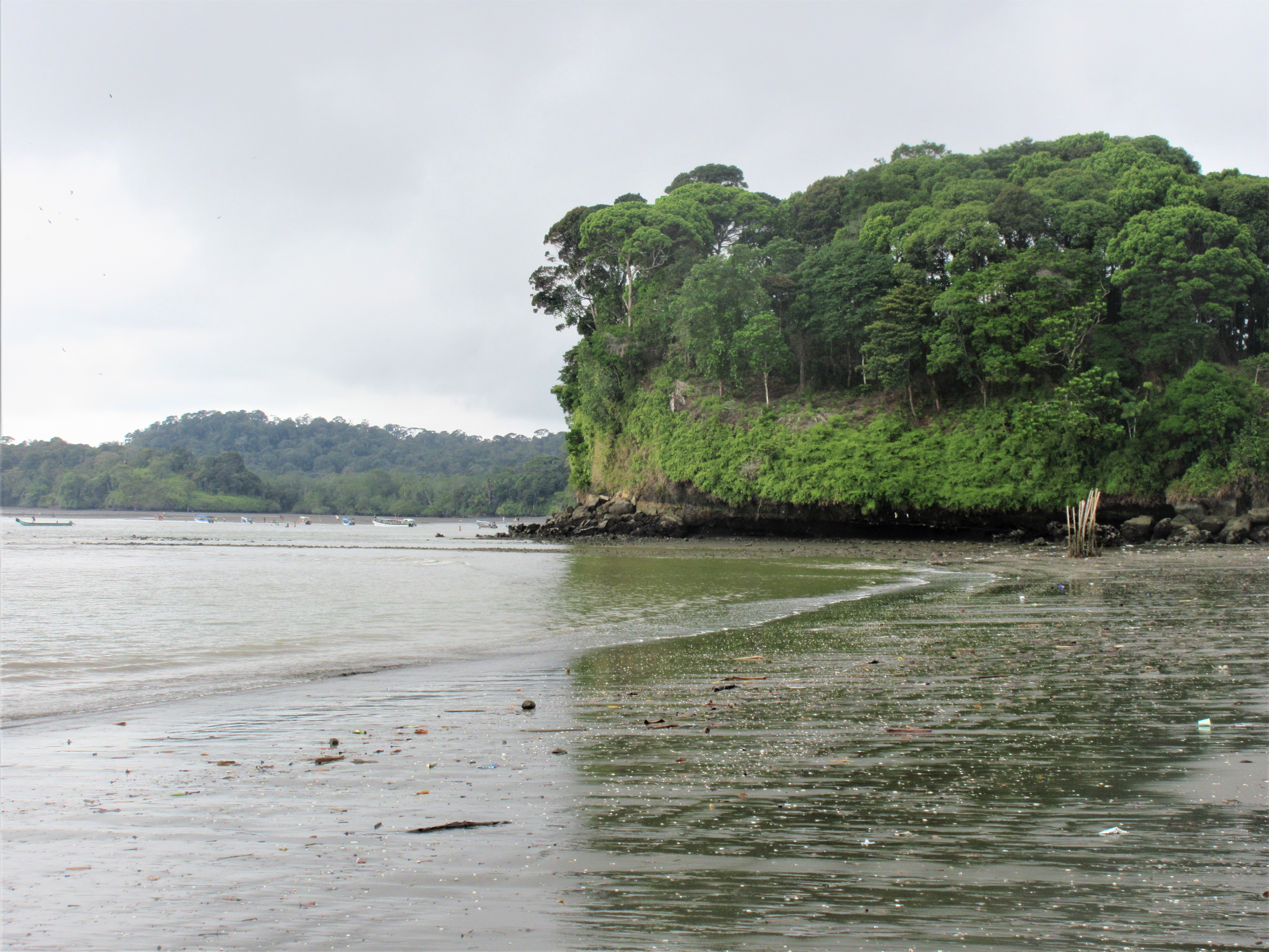
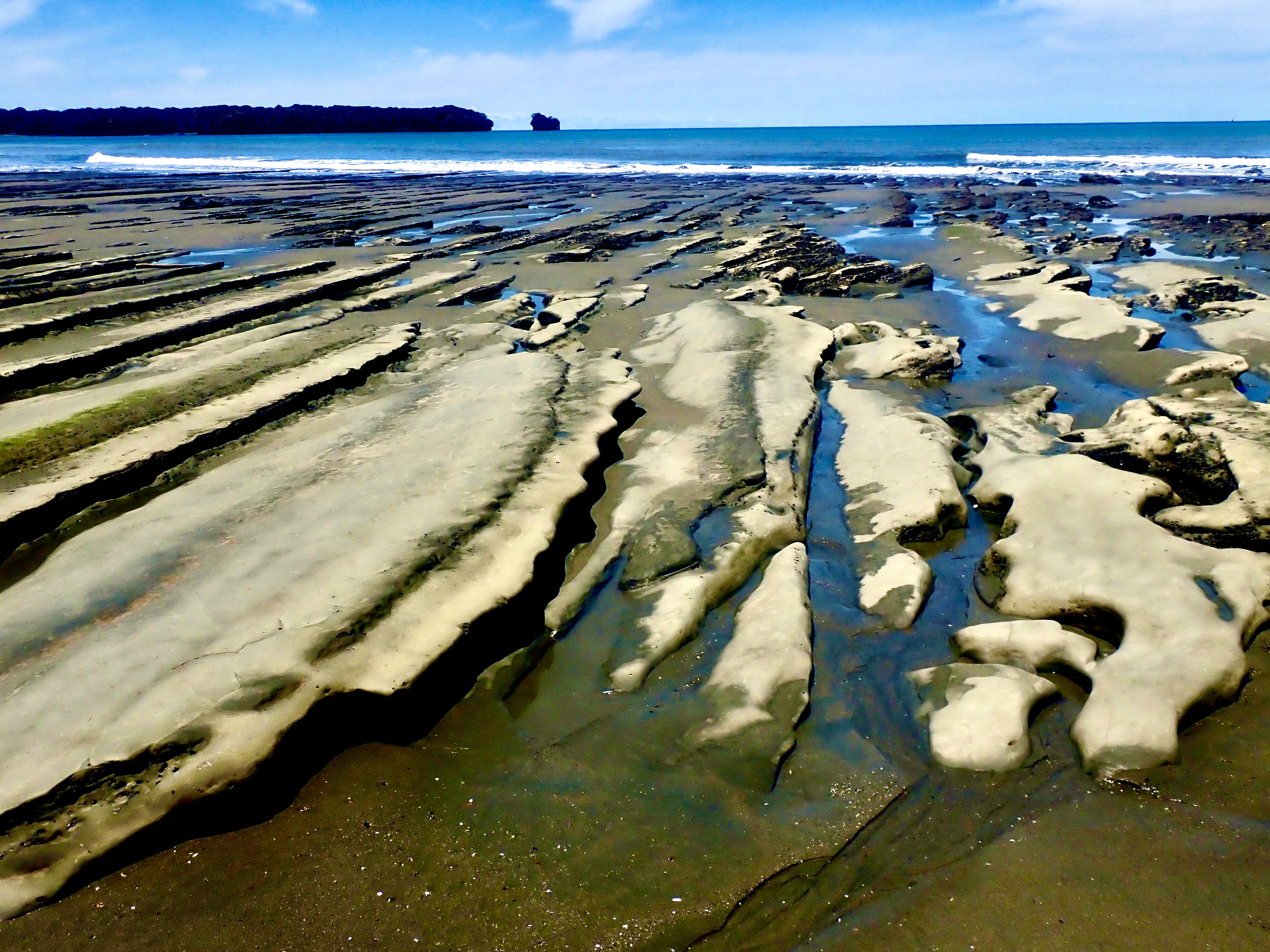
The beaches north of Buenaventura are stunningly beautiful. Mountain cliffs drop out of lush tropical jungles, vast expanses of hard sand beaches, secluded little bays and huge caverns at beach level bore into the cliffs. At high tide the beaches disappear under Pacific waves crashing into the cliffs. Retreating backwash clashes with incoming waves creating turbulent, churning waters.
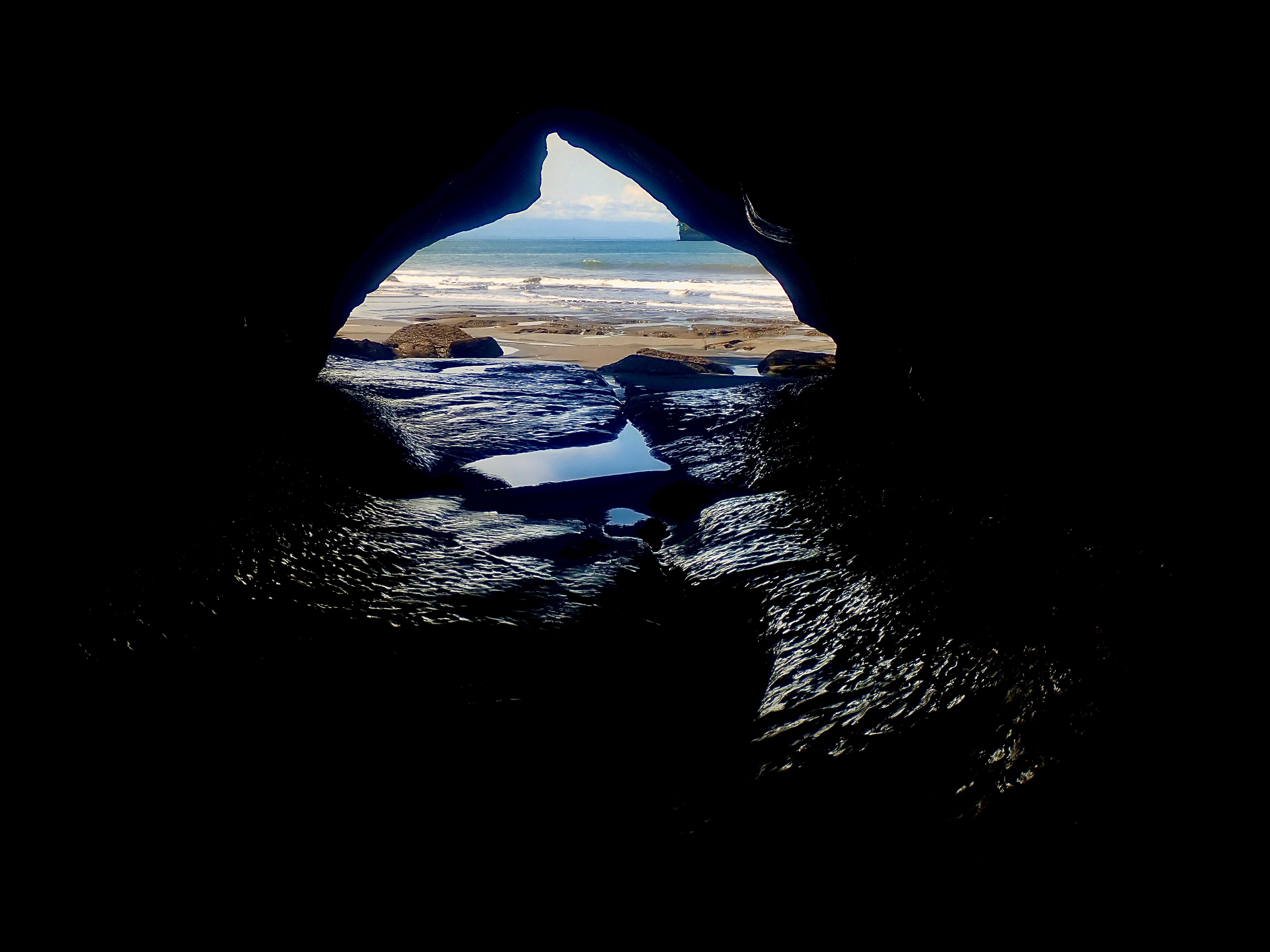
Beach cave Ladrilleros Beach
They say Guachalito beach south of Nuqui on Colombia´s Pacfic coast is the most beautiful beach in Colombia with its mix of wild jungle and mountains. But I think the coastline north of Buenaventura between villages of Juanchaco and Playa la Barra is not only more beautiful but more remote and forgotten.
Colombia is the only country in South America with access to both the Atlantic and Pacific coasts. While Colombia's Atlantic coast is taunted for all its beauty, history and culture - the Pacific coastline remains an ignored area of Colombia.
There are only four viable access points to Colombia's 865-mile-long Pacific coastline. Bahia Solano and Nuquilie west of Medellin in the Choco region. It´s a coastline of wild and remote natural beauty and pristine beaches which can only reached by boat or plane.
But there are only two roads leading to Colombia´s Pacific coast and both are port cities in southern Colombia. Tumaco in the Narino province near the city of Pasto and Buenaventura in the department of Valle de Cauca near the city of Cali.
Buenaventura is a 3-hour bus ride west of Cali, also Tulua and Buga further the north in the valley, Being Colombia´s major port city on the Pacific there's a modern highway tunneling through the Andean mountains busy with trucks transporting containers to and from the port.
The beaches north the port city of Buenaventura are well known by the Colombians of southern Colombia but rarely frequented. Outside of the aficionados who frequent these beaches most have some reservations discouraging them from visiting.
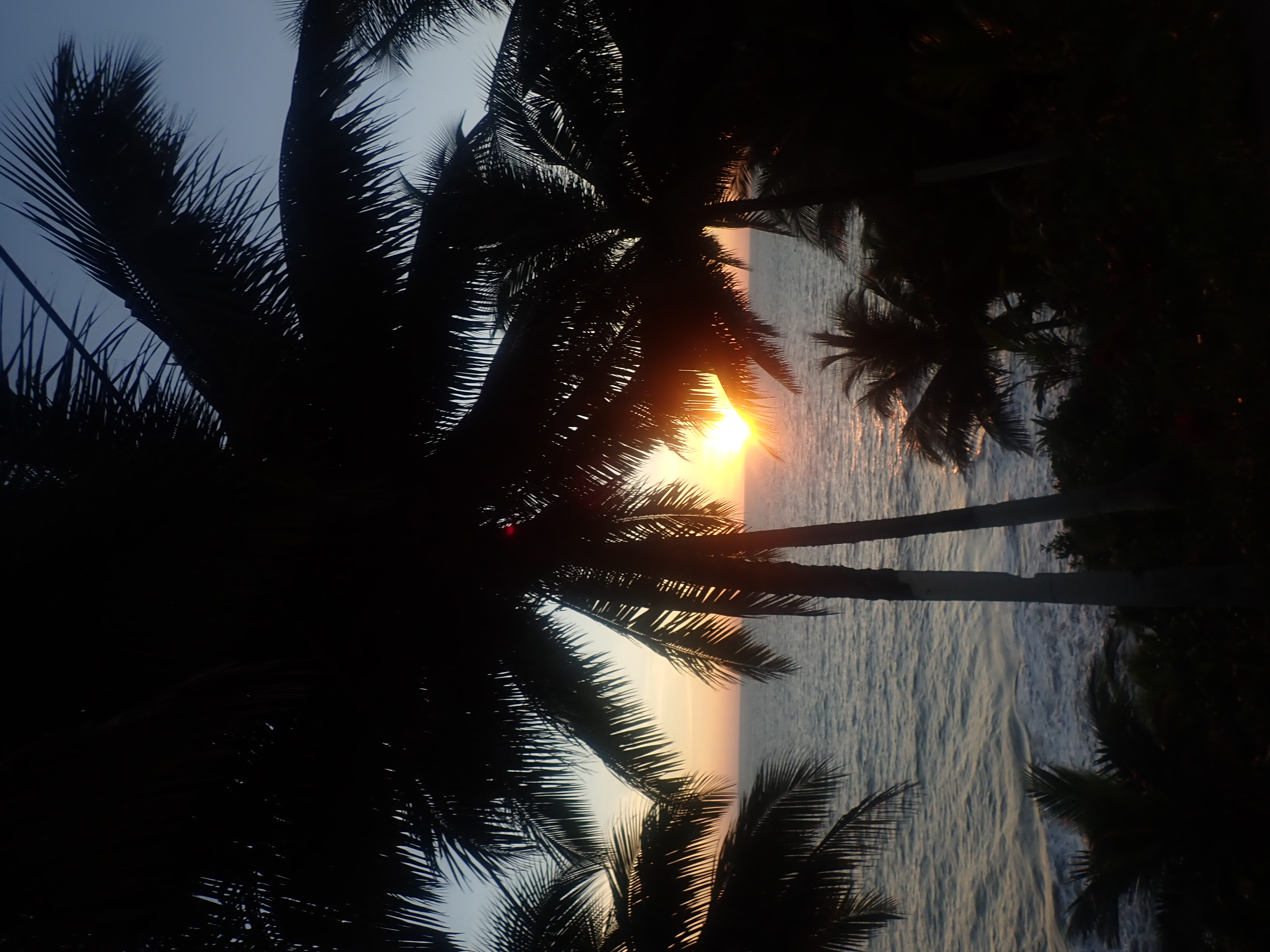
sunset Plya Ladrilleros
OvercomingBuenaventura's Dicey Reputation
Colombians and the international travel advisories don't encourage tourists to visit Buenaventura or the beaches in this area. A port city of 400,000, 60% of Colombia's sea imports and exports pass through Buenaventura. The port city is also a major transit route for drugs leaving the country. In 2007 vicious cocaine wars made Buenaventura Colombia's deadliest city.
Today, while the city is rife with poverty, unemployment and gang violence, the murder rate remains below the national average. The city is making positive moves to attract tourism. There is a tourism association of 120 businesses and they believe Buenaventura is the best-kept tourism secret in Colombia today. The possibilities are there but much remains to do.
Boys playing soccer on the beach
The culture of the Colombian Pacific is African inflected where an overwhelming Afro-Colombian population live in small, scattered communities. Most are descended from slaves brought in by the Spaniards to work in gold mines. Combined with a significant indigenous influence they have preserved their ancestral heritage through music and cuisine.
Buenaventura is a busy, congested city. It´s challenged by poverty with abandoned buildings, over grown lots and graffiti painted walls and. To an outsider who has seen Colombia, Buenaventura is in serious contention as one of the ugliest cities in Colombia. , in my opinion, it is one of the ugliest cities in Colombia.
The center of town, running along Calle 1, is packed with hotels serving merchant sailors. Open door restaurants and bars blast salsa music. Everyone is friendly and a lot of people say Buenaventura merits an overnight stay. But enough about Buenaventura. Unless you´re arriving late in the day you probably won´t be staying there
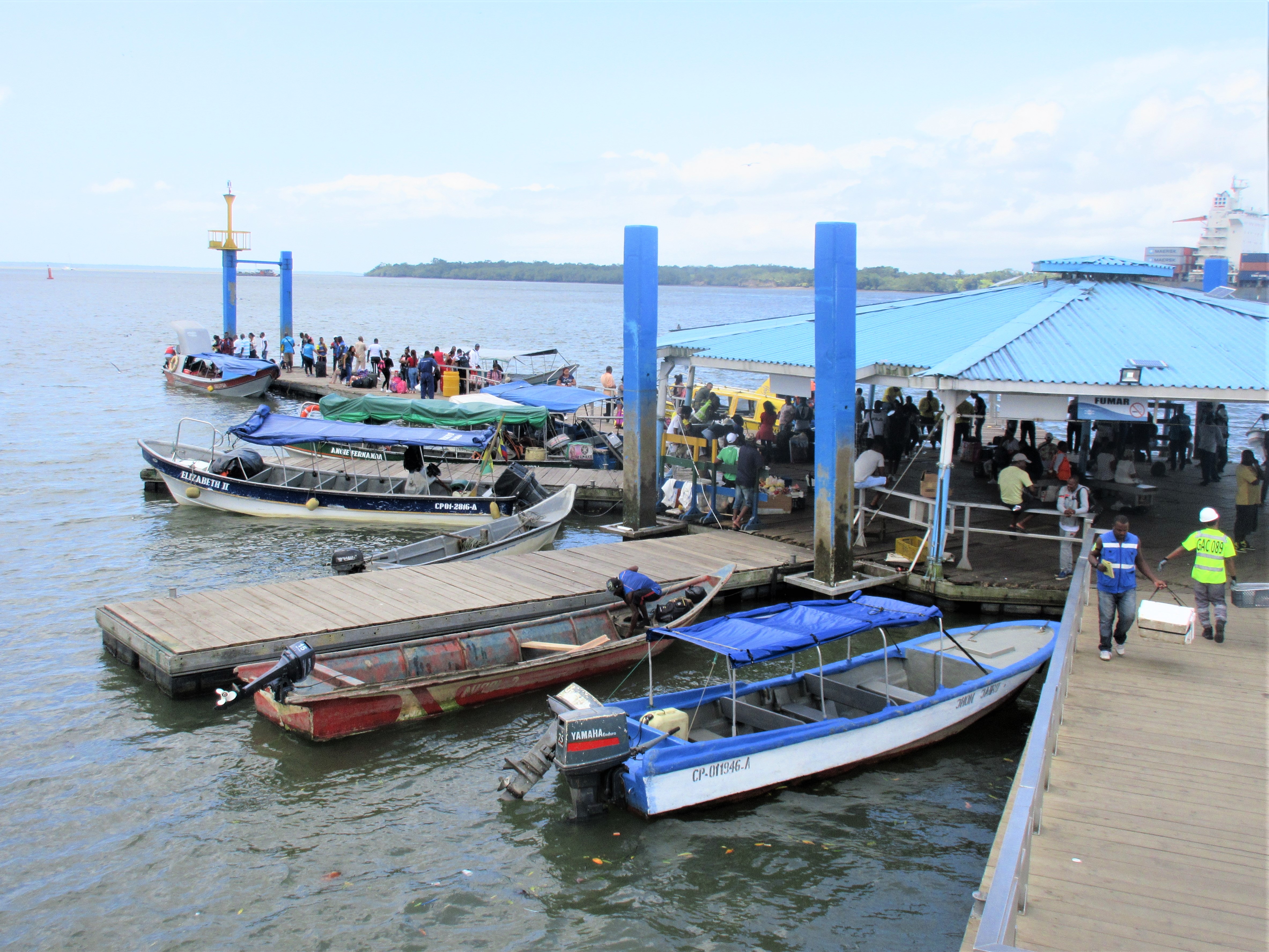
Muelle Turistico at Buenaventura
Heading Straight for the Beaches
Most tourists arrive at the bus station and head straight to the port to catch a boat to the nearby beaches without stopping in the city center.
The beaches can only be reached by speed boats or lanchas that leave from a dock at the Muelle Turistico or the tourist dock. Catch a taxi outside of the the train station to the Muelle Turistico 10,000 COP. ($3). The taxi will take you right to the dock where there are booths selling tickets to the various beaches outside of town.
Boats leave 3 times a day 8 a.m., 1 p.m. and 4 p.m. to the most popular destinations - the beaches of Pianguita and Juanchaco.
A ticket costs from 70,000 - 140,000 COP ($20- $40) round trip per person depending on the beach one is heading to. There are speed boats going all the way up the coast to the landlocked, Pacific coastal town of Nuqui, a 120,000-200,000 fare ($33-$56) from Buenaventura. The trip takes about 8 hours. There are cheaper cargo boats going up the coast but the trip takes 20-24 hours.
Pianguita Beach
Pianguita beach
The closest beach about an hour´s boat ride outside of Bueanventura is Pianguita. The boat pulls up short of the beach making the passengers jump out in waist deep water wading into shore keeping their bags dry by holding them over their heads. A cluster of modest hotels, bars and restaurants line the beach at the jungle's edge.
Accomodations are rustic with plenty of places to stay inexpensively. Most offer a package deal which includes breakfast, lunch and dinner.
The beach and town are locked in a small bay. The brown sand beach stretches along a cove. At low tide one can walk to neighboring beach of La Bocana to the south. Both are nice stretches of beach. Unfortunately the beaches along this swath of the Pacific completely disappear at high tide which comes in twice a day. But there are roads going between towns through the desert.
stairs descending from the jungle to the beach
At low tide the beach is scattered with plastic left by the withdrawing tide. Being so close to a port city, floating refuse is a problem, but not more so than other beaches in the world close to a major city.
The speed boats will ferry visitors up and down the coast stopping at the neighboring beaches of La Bocana, Maguipi, Juanchaco, La Barra, and Ladrilleros. The tour boats will pull up at waterfalls and let you take a dip.
The water is warm and the people spend hours just standing in the shallow water talking as the pelicans dive bomb for fish. Beach vendors will crack open a coconut for a few thousand pesos.
At night there's not much to do. Pianguita is a safe laid-back pueblo. The tide comes up to the break wall in front on the restaurants. Join the crowd, grab a beer or an ice cream and watch the bats swoop. A few watch a soccer game on t.v. But most watch the fishermen standing waist deep in water under the restaurant lights. Every time one of them hooks a fish the crowd applauds and cheers.
Juanchaco beach
Juanchaco Beach
is a small fishing village a one hour speed boat ride north of Buenaventura. The village is situated in the National Park of Bahia Malaga - Parque Nacionoal Natural Uramba Bahia Malaga. This is a tourist destination famous for whale watching in the months of July, August and September - August offers the best chance of seeing whales breaching.
There a lot of econonical hotels and restaurants in the village. Prices start at 100,000 COP per day ($28) with breakfast and often lunch and dinner included in the price.
Economical lunches and dinners can be found at the many local restaurants. It's mostly fish, rice and fried plantains. The bars serve cold beer and cocktails day and night.
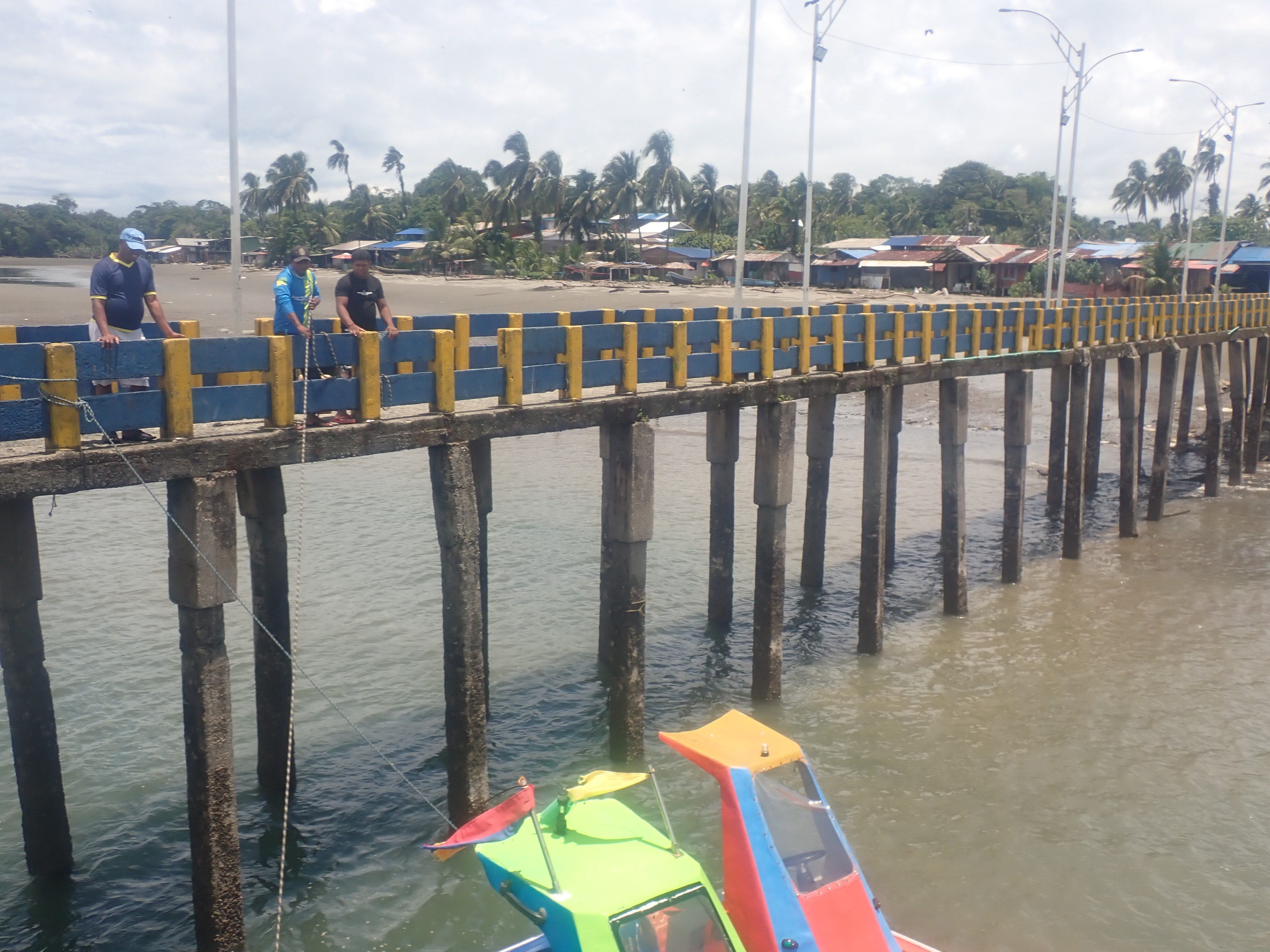
There is a dock in town where the speed boats from Buenaventura depart and arrive. It is also where most of the tours depart. From the village one can book tours for whale watching, bird watching, visiting the mangroves, nearby waterfalls and other secluded beaches like Las Tres Marias and Playa Juan de Dios. Guided canoe tours of the mangroves and waterfalls start at 50,000 cop per person ($14).
Dock at Juanchaco
Juanchaco is a little busier than the villages to the north with more stores, bars and restaurants. The beaches are deep and wide at low tide. There are no waves and the beaches at Juanchaco are considered is more family friendly.
But I didn´t like Juanchaco as much as little villages to the north - Playa de Barra and Playa Ladrilleros. There was a little too much garbage to be acceptable especially during a low-season stay in Juanchaco.
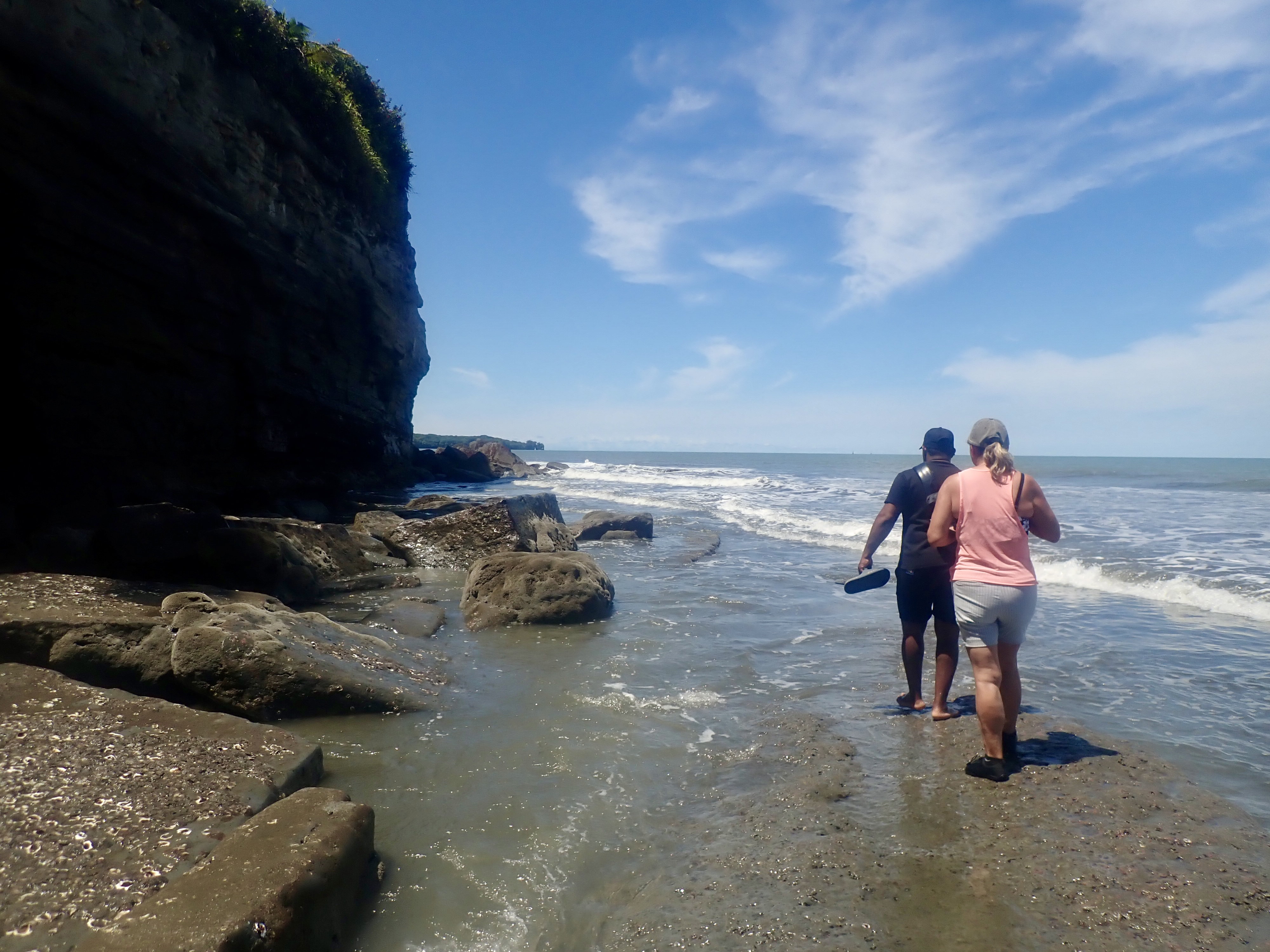
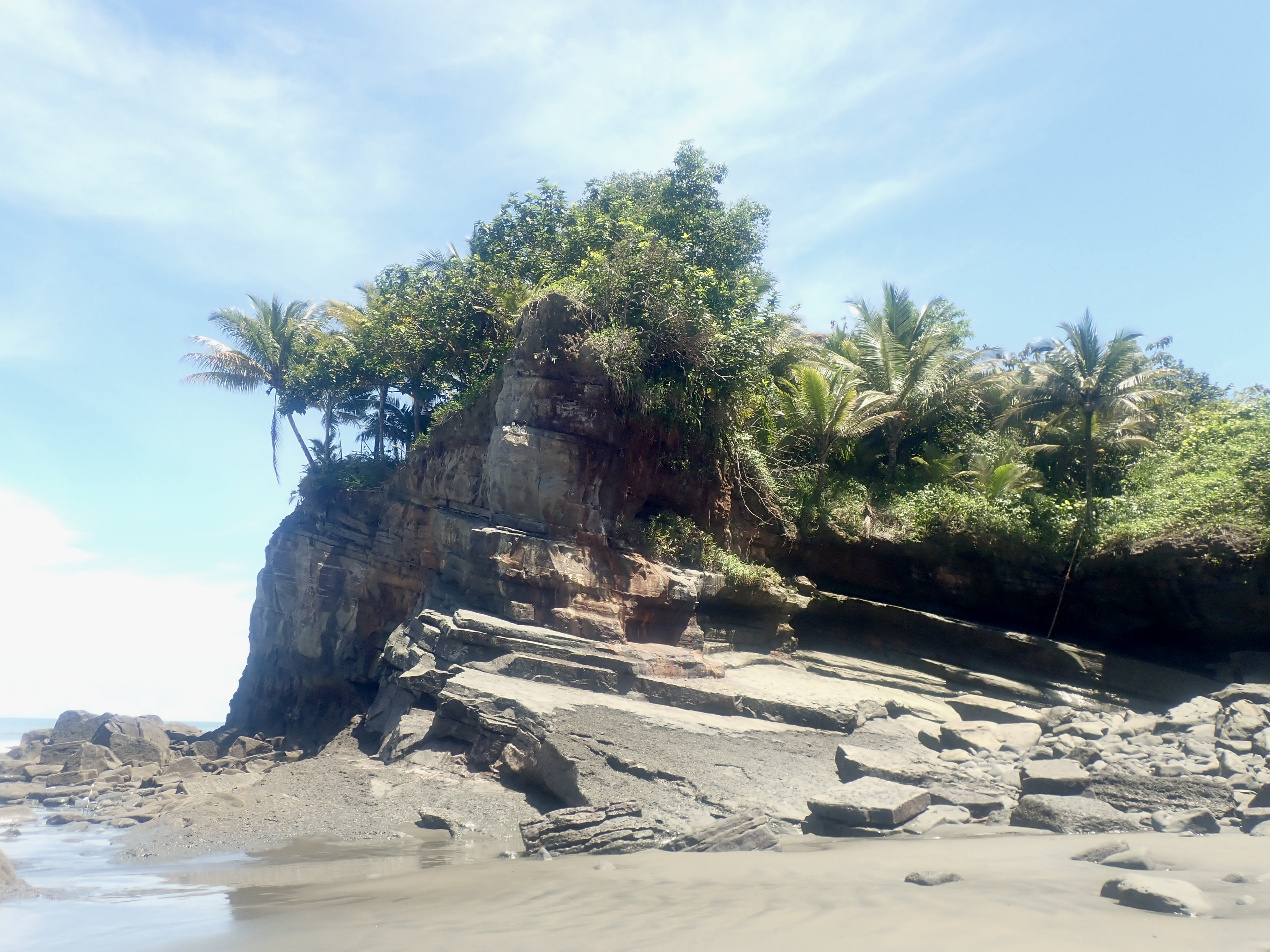
Walking north from Juanchaco to Playa Ladrilleros it gets dramatic as one finds the magic coastline with shiny stone faced cliffs and huge caves. They say not too many people walk the beach. Most visitors just want to sit around, eat, drink and sun bathe near their hotel.
But if one likes a good walk, then the coastline between Juanchaco and Playa de Barra is exquisite.
the beach north of Juanchaco at low tide
But hiking the beach can be tricky. One musts navigate the tides. At high tie the beach disappears but one can enjoy the beaches at low tide. Local guides are for hire to navigate the tides,. They can also cut around the cliffs using trails jungle trails. Their rates start at 30,000 COP ($8.50). One can easily walk from Juanchaco to Playa de Barra in 2-3 hours at low tide, stop for lunch then take a car or motor cycle ride back to town at high tide along the jungle road.
This road connects Juanchaco, Playa Ladrilleros and Playas de Barra. It runs by the military landing strip in Juanchaco. Most of it is paved up to La Barra. A ride in a tuk-tuk is only 10,000 COP ($2.80) from Juanchaco to Playa de Barra.
Playa Ladrilleros
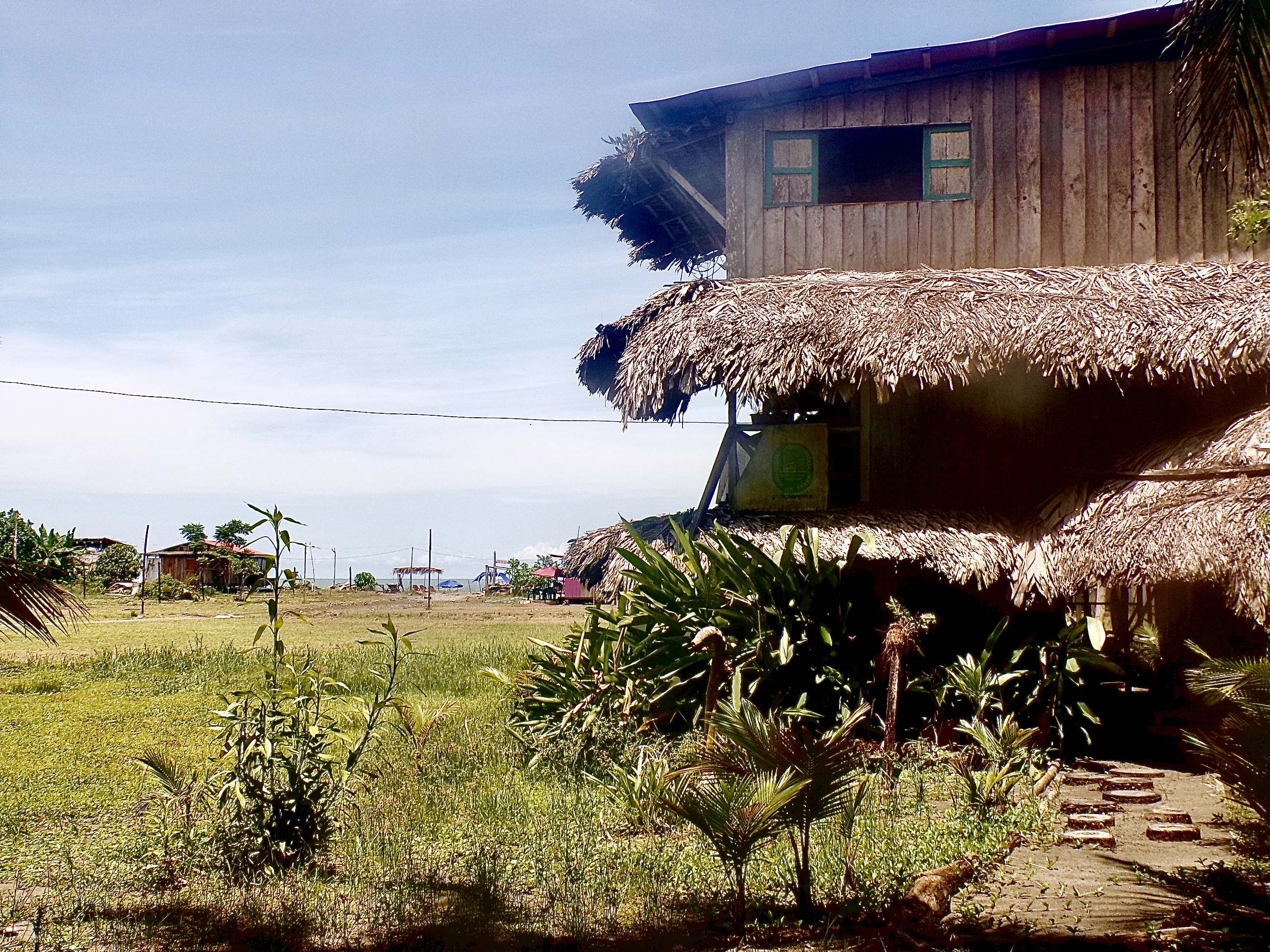
is a tiny village in the jungle on the edge of the cliffs overlooking the Pacific. It is north of Juanchaco a 30 to 40 minute hike. There are plenty of restaurants, rooms and huts along the road and overlooking the sea with cement stairs leading to the beach.
The hotels and restaurants serve meat and chicken or fish. Fish is the obvious fresh option and comes fried or in a stew with rice, fried plantains and lemonade. There is also an abundance of shrimp here which they serve up grilled, fried, in soups and with fried rice.
Beach at La Barra during low tide
Playa de Barra
is a village about an hour walk along the beach north from Playa Ladrilleros. De Barra is larger than Ladrilleros and sits right on the beach. At low tide the beach is enormous and a walk to the water is a good 5 minute hike. There are plenty of rooms, cabins bars and restaurants on the beach.
Playa de Barra is popular with foreigners and Colombians who are looking for peace and quiet and to get away from it all.
Le Barra
Not Many Visitors Come to the Beachs of Buenaventura. Why?
Most of the visitors are couples and families from Buenaventura and other cities in Valle de Cauca. More families go to Pianguita and more couples and solo travelers go to Playa Ladrilleros and Playa de Barra.
But few visitors are from the nearby city of Cali or from any other part of Colombia for that matter. Colombians traditionally choose to go to beaches on the country’s Caribbean coast - places like Santa Marta, Capurgana, Convenas or to the island of San Andres. These destinations are farther and more expensive, especially for the Colombian's living in southern Colombia. But with cheap domestic flights most don´t find this a problem.
While these destinations are further they are usually easier to get to and visited more because they are organized, cleaner and offer more activities.
That is the reason the beaches of Buenaventura are not well known. While close to Cali, inexpensive and easily accessible by car, they are organized to meet an ecological tourism level at best.
Everyone lays the blame for these problems on the Colombian government which has long ignored development along it´s Pacific coast. The government should do more to promote tourism to these Pacific towns. They could set up two year school program dedicated to the study of tourism and hospitality, hold conferences and teach a new generation how to work properly and cater to a growing tourist industry.
The Pacific beaches of Bahia Solano and Nuqui seem a bit more organized for tourism but could also use more help from the government. These beaches are cleaner being farther from a major city and at this time are not listed as a travel advisory.
Apart from it all, the coast between Juanchaco and Playa de Barra is breathtaking and in my book a must see as are the beaches around the Pacific towns of Bahia Solano and Nuqui.
Jon McInnes is a journalist who has been traveling to Colombia since 1972. He travels to Colombia and other parts of South America yearly and writes for newspapers, food, wine and travel publications. He currently lives between Colombia and Detroit. You can also follow him on facebook and contact him via email at: jonmcinnesjon@gmail.com
Arboletes-Beaches and Bathing in a Mud Volcano on Colombia's Caribbean Coast
Arboletes is a small, seaside village of 22,000 people on Colombia's southern Caribbean coast. It's tourist destination known for its beaches and mud volcano where one can bathe.
Rincon del Mar-Quaint Fishing Village Just Three Hours from Cartagena
The beaces around the city of Cartagena are crowded, full of locals, tourists and relentless vendors. Don't despair. Take in the city sites then head to the sleepy fishing village of Rincon del Mar just two hours south of the city.










.png)


.png)


.png)


